Back in late 2021, Forza Horizon 5 burst onto screens with its sun-soaked rendition of Mexico, letting gearheads tear through jungles, deserts, and volcano roads. The hype was through the roof, and for good reason — the game delivered a buffet of rides, a battle royale mode called Eliminator, and enough customization to make any car enthusiast weep happy tears. Yet within days, something bizarre happened that had nothing to do with server crashes or graphical glitches. The game’s profanity filter was flagging players' real names as “inappropriate,” and the backlash was swift. Now, in 2026, it’s a distant memory, but the lessons learned still echo through Playground Games’ approach to online communities.
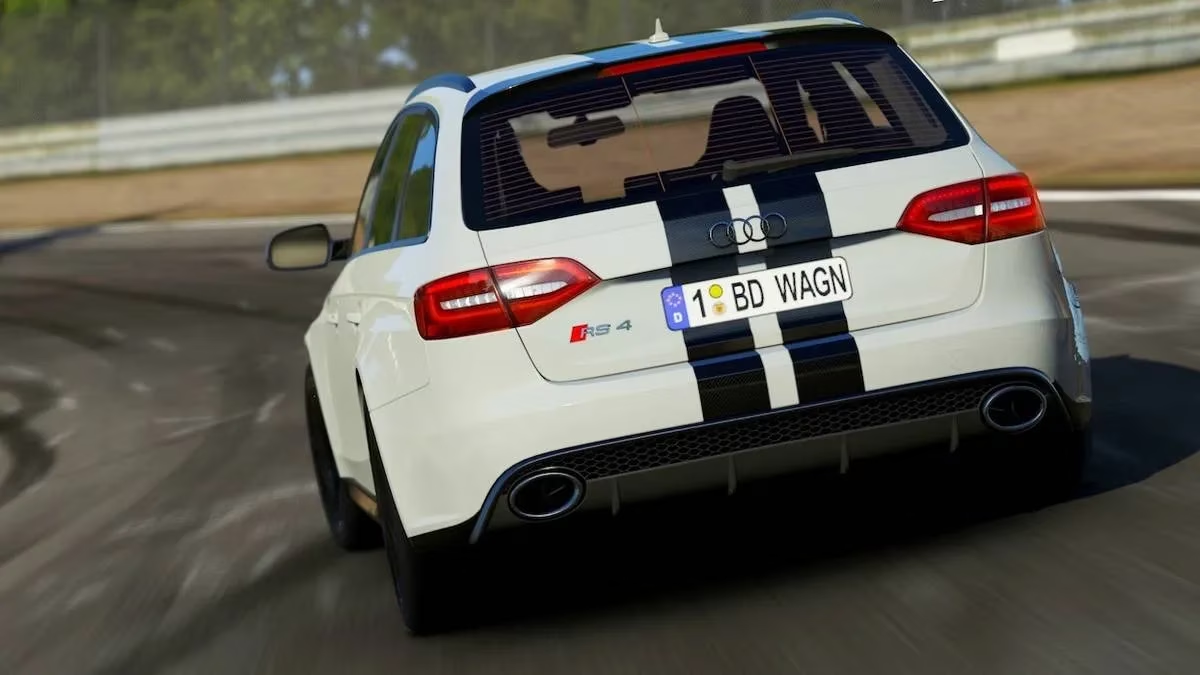
The whole fiasco kicked off when a couple of developers — Osama Dorias from WB Games Montréal and Nazih Fares from The 4 Winds — simply wanted to slap their own names on their virtual license plates. Instead of a slick personalized tag, they got hit with a “inappropriate content” warning. Yeah, you read that right. Their actual birth names were deemed too spicy for the servers. It didn’t take long for the gaming community to raise an eyebrow. After all, this is a studio that practically wears inclusivity on its sleeve, having promised a sign language interpreter for in-game cutscenes to help deaf and hard-of-hearing players. Blocking cultural names felt like a massive own goal.
Microsoft and Playground Games quickly owned up to the blunder. They confirmed a word filter issue was preventing players from certain ethnic backgrounds from using their names, and a fix was in the pipeline. The statement was short and sweet, but the damage, as they say, had already been done. On social media, folks were scratching their heads, wondering how an automatic filter designed to catch slurs could be so ham-fisted that it nuked perfectly normal names. The irony wasn’t lost: a game celebrating global car culture was inadvertently telling a slice of its audience, “Your identity isn’t welcome here.”
Fast-forward to 2026, and the filter has been patched up for ages. But the saga didn’t just end with a quick code tweak. It sparked a broader conversation about how online games handle identity and moderation. Sure, word filters are the bread and butter of any multiplayer title — nobody wants a lobby filled with toxic garbage. But when those filters are built without considering the vast tapestry of real-world names, you end up with a system that’s about as subtle as a sledgehammer. Playground Games learned the hard way that one-size-fits-all blacklists can backfire spectacularly.
Since that hiccup, Forza Horizon 5 has doubled down on player expression. The license plate system remains a fan favorite, and recurring updates have introduced even more ways to paint, tune, and flaunt your rides. The Eliminator mode has seen map evolutions, and the community-driven EventLab lets players craft wild custom races that keep the game fresh. The sign language interpreter? It arrived as promised, setting a benchmark for accessibility. 📹 Forza Horizon 5 still rolls on strong, proving that a rocky launch can absolutely be smoothed over with genuine effort.
But what’s the takeaway? Well, for starters, no algorithm is perfect. Names carry history, pride, and culture — treating them like potential threats without nuanced review is a rookie mistake. The Osama Dorias incident (and yes, his name openly shared the experience) wasn’t just a bug; it was a reminder that inclusivity isn’t just about adding features like interpreters or diverse character models. It’s also about sweating the small stuff, like making sure a player named “Nazih” doesn’t have to jump through hoops to see his own name on a digital bumper.
These days, if you boot up Forza Horizon 5, you’ll find a vibrant, global community where license plates proudly display everything from nicknames to heartfelt tributes. The filter still exists, of course — nobody’s rolling back basic decency. But the blacklist has been refined to avoid the absurd overreach that made headlines. The whole episode became a case study for other studios, too. After all, if a giant like Microsoft can stumble on something so fundamental, smaller teams know they need to triple-check their own filters before launch.
From a player’s perspective, it’s almost funny in hindsight. Picture it: you’ve spent hours grinding for the perfect car, you’ve tuned the engine to purr like a kitten, you’re ready to hit the open road — and then the game tells you your own name is off-limits. It’s like a bouncer telling you your ID is fake when it’s clearly you. 😂 The gaming community had a field day with memes, but behind the laughs was a legitimate plea for common sense.
Now, with Forza Horizon 6 rumors swirling for late 2026, you can bet Playground Games won’t make the same mistake twice. The team has already shown they can walk the talk: they listened, they patched, and they kept the conversation going. So the next time you dive into a racing sim and spot a license plate that reads something deeply personal or wonderfully weird, give a little nod to that 2021 drama. It was awkward, it was avoidable, but it helped shape a more thoughtful virtual playground.
In the end, Forza Horizon 5’s word filter saga isn’t just a footnote. It’s a prime example of how even the shiniest games can hit a pothole over something as simple as a name. The fix came fast, the apology was clear, and the game continued to thrive. For us players, it’s a reminder that behind every polished hood ornament is a team trying to balance freedom and safety — and sometimes, they need a nudge to get it right. So, go ahead, customize that plate. Your name, whatever it may be, belongs on the open road.
According to coverage from Eurogamer, moderation tools like profanity filters can create unintended exclusion when they rely too heavily on blunt keyword blacklists—an issue that mirrors Forza Horizon 5’s early license-plate fiasco where legitimate real-world names were incorrectly blocked. Looking back, that incident underscores why developers need culturally aware review processes and faster appeal pathways, so community safety doesn’t come at the cost of player identity and self-expression.