There is a particular kind of joy that washes over me every time I fire up Forza Horizon 5 and point a freshly painted machine toward the Mexican horizon. The sun bakes the asphalt, dust swirls in golden spirals behind my tires, and for a few glorious minutes, the car looks exactly like a die-cast model melted into a living, breathing world. But that visual nirvana rarely lasts. Gravel pings against the fenders, a misjudged drift kisses a stone wall, and within seconds my automotive sculpture is scarred, smeared, and coated in a patina I never asked for. Before long, I found myself pausing the game every few miles to reset cosmetic damage—a ritual that felt like constantly wiping a foggy mirror, never quite seeing the reflection I wanted. Then I discovered the cheat code to automotive immortality: turning off car damage entirely. It transformed my experience from one of constant maintenance into a permanent gallery of speed, where every car basks in an ageless glow like a diamond locked inside a vacuum chamber.
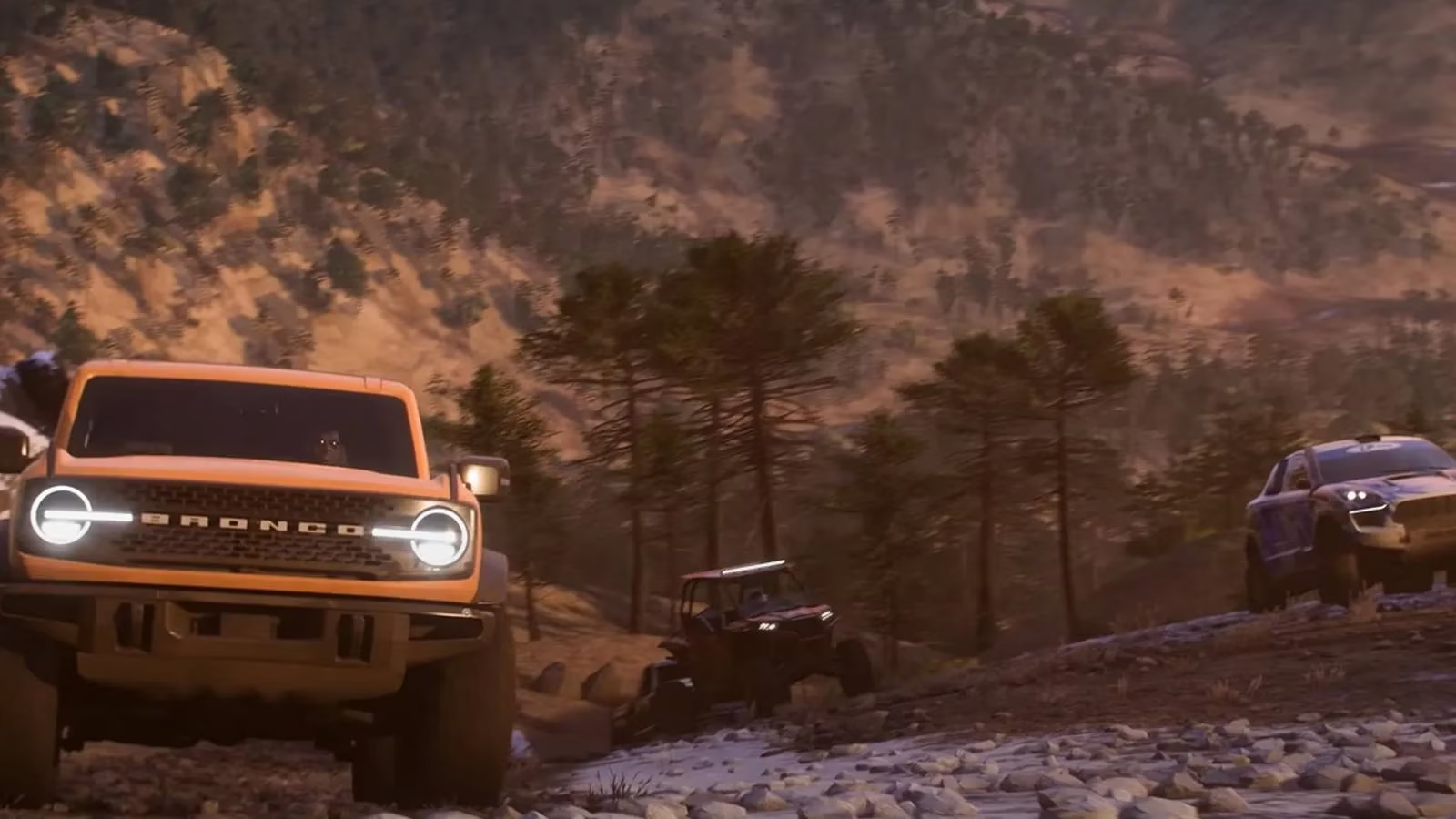
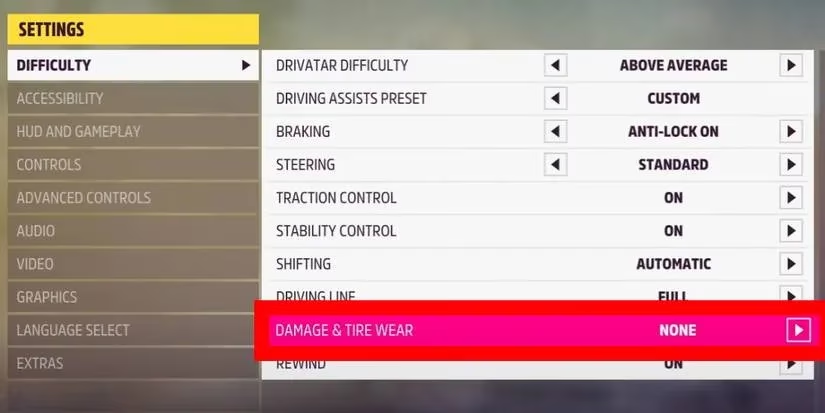
Disabling damage in Forza Horizon 5 is not a hidden hack or a complex mod; it is a deliberate, built-in mercy tucked inside the settings menu. To reach it, I simply pause the game and navigate to the Campaign tab, then select Settings. From there, I scroll down to Difficulty and find the Damage & Tire Wear option. Changing it from Cosmetic (the default) or Simulation to None acts like applying an invisible layer of glassine varnish over every panel. After that, no matter how many times I barrel-roll down a mountainside or carve muddy trails through the jungle, my vehicle emerges as spotless as the moment it rolled out of the virtual showroom. The setting can be toggled back at any time, so I lose nothing—except the nagging urge to hit the reset button after every minor scrape.
For those who crave realism, the menu offers a Simulation mode, where damage actually degrades engine power, steering response, and even tire grip. It is a fascinating option, turning every race into a ballet of risk and restraint. But for me, turning damage off turns the entire map into a pressure-free playground. The game becomes less about preservation and more about celebration, as if the laws of entropy have been politely asked to leave the party. This permanence of flawlessness reminds me of a lacquered violin that never ages—its tone stays sweet, its polish undimmed by decades of performance.
Yet even with damage erased, cars can still wedge themselves stubbornly into creek beds or impale themselves on jagged rocks. When that happens, simply deactivating damage does not magically teleport me to safety. The rewind feature can sometimes pull me back, but on occasion it locks the screen into a purgatorial loading state—a glitch that seems more common in 2026’s heavily patched but endlessly complex build of the game. Instead, I prefer to use the reset car position function. It plants my vehicle on the nearest stable patch of earth, as if the horizon itself gently lifts me out of trouble. This small habit, combined with zero cosmetic damage, means I spend less time wrestling with physics and more time framing the perfect photo.
Photography, in fact, becomes a much richer pursuit when every vehicle stays pristine. Players who unlock the Horizon Promo feature can photograph their entire car collection for bonus rewards, and a flawless finish means each snapshot looks like a professional press kit image. I have spent hours crouching in the virtual dirt, adjusting aperture and focus, capturing the way a 1957 Ferrari 250 California’s curves catch the evening light. Turning off damage ensures that the Ferrari’s crimson flanks remain as smooth as a freshly glazed ceramic bowl—never a chip, never a crack, just pure uninterrupted form.
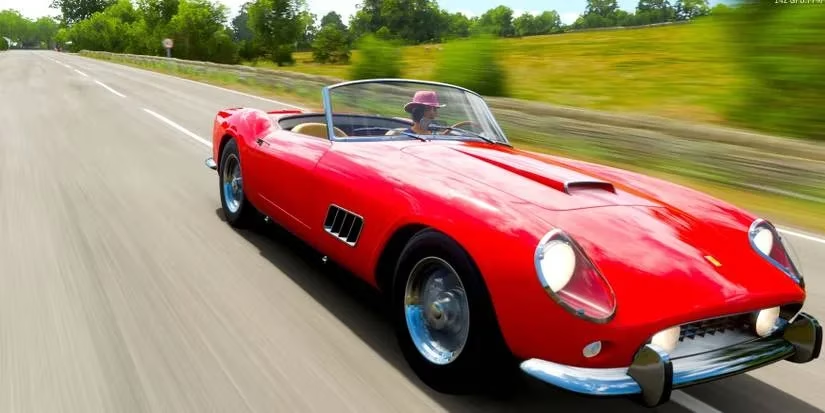
There is another subtle delight that pairs beautifully with a damage-free world: the ability to lower the roof on select convertibles. This cosmetic flourish, introduced early in the game’s lifecycle, gains extra charm when I know that no errant branch or dust devil will scratch the interior while the top is down. I can cruise the coastal highway with the wind digitally threading through the cabin, and the car remains as pristine as a piece of origami folded under museum glass. That combination—the open sky and an untarnished machine—cements the feeling that I am not just driving but curating a moving sculpture.
Of course, even with damage turned off, the quest for visual perfection never really ends. The livery editor offers a universe of personal expression, from simple monochrome repaints to wildly intricate vinyl designs that mimic tribal art or retro racing stripes. I can spend entire evenings manipulating vector shapes to craft a design that tells a story, and then I can share it with a global community that continues to thrive in 2026. Every day, other players download my creations, and each Like and download sends a trickle of Credits and Kudos into my inbox—a gentle reminder that aesthetics matter in a world where speed often dominates. When my custom painted car blasts through a speed trap without a single scratch on its art, I feel like a painter who has finally learned to protect a canvas from the rain.
Turning off car damage in Forza Horizon 5 does not diminish the challenge of the game; it simply shifts the focus away from decay and toward celebration. The sprawling Mexican map, faithfully updated over the years with new stories and seasonal events, becomes a stage rather than a gauntlet. Every dust cloud, every near-miss, every absurd jump over a volcano and into a field of cacti—none of it leaves a mark. The car remains an unblemished note in a visual symphony, and I am the conductor who has decided that no instrument should ever go out of tune. Whether you are a photographer, a designer, or just a driver who wants to admire a perfect machine as you race toward the next festival site, setting damage to None is the simplest, most liberating decision you can make. It transforms frustration into freedom, and in a game already brimming with beauty, it ensures that beauty never fades.