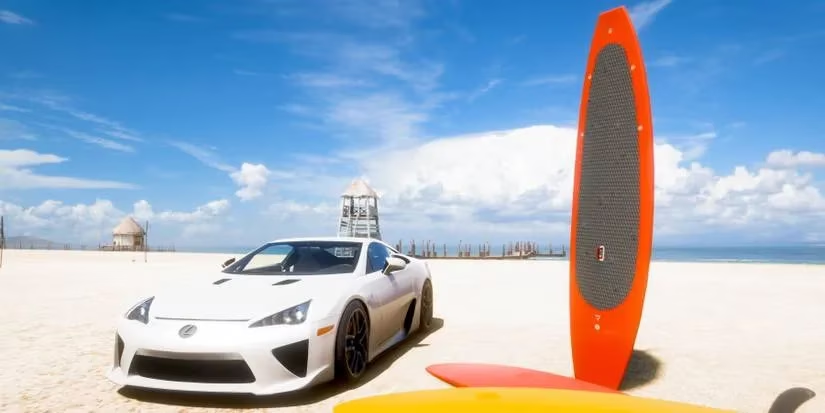
I still remember the first time I fired up Forza Horizon 5 back in late 2021. The initial drive from the airstrip down the volcano had me gripping my controller like it was a real steering wheel, grinning like a kid who'd just found the keys to his dream garage. Six years later, in 2026, I find myself returning to the Horizon Festival in Mexico, and this time I decided to approach it not as a wide-eyed newcomer, but as someone who genuinely wanted to master the art of racing across this stunning open world. The following collection of insights is a distillation of the many mistakes I made, the late-night victories, and the quiet lessons I picked up between the roar of engines and the dust of off-road trails.
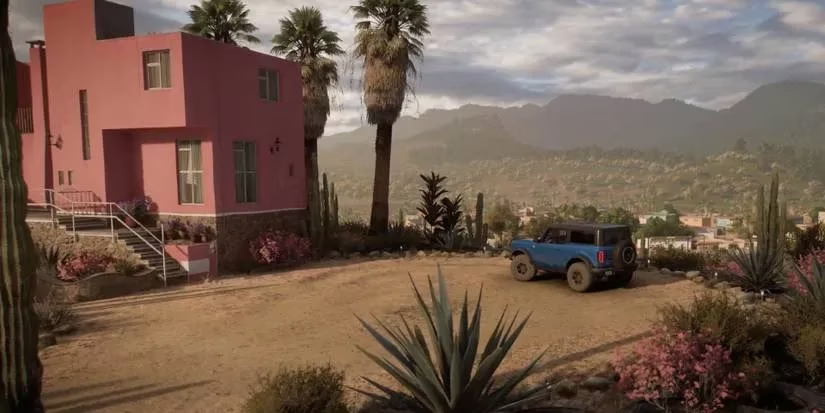
One of the earliest and most pleasant discoveries during my first playthrough was the existence of player houses. I remember thinking that owning property in a racing game sounded like an unnecessary gimmick, but the practical benefits changed my mind completely. When I purchased my first casa near Guanajuato, I realized that being able to spawn in a specific region of the map fundamentally alters how you engage with the game. Instead of driving halfway across Mexico just to reach a cluster of drift zones I wanted to attempt, I could simply load in and be there immediately. Over time, I made it my mission to collect all seven homes, and each one became a strategic foothold for tackling different events and activities more efficiently.
Of course, no home can save you from a sluggish driving experience. I learned this the hard way when I initially prioritized visual fidelity over responsiveness. Beautiful as the game is on high settings, there is something uniquely frustrating about losing a tight race because your car felt like it was wading through molasses. Once I toned down the graphical settings and let the frame rate climb, the entire handling model came alive. The connection between my inputs and the car's movements became immediate and precise, which made every corner feel like a conversation rather than an argument. If you find yourself spinning out at the same hairpin or overshooting braking zones, try prioritizing frames over frills.
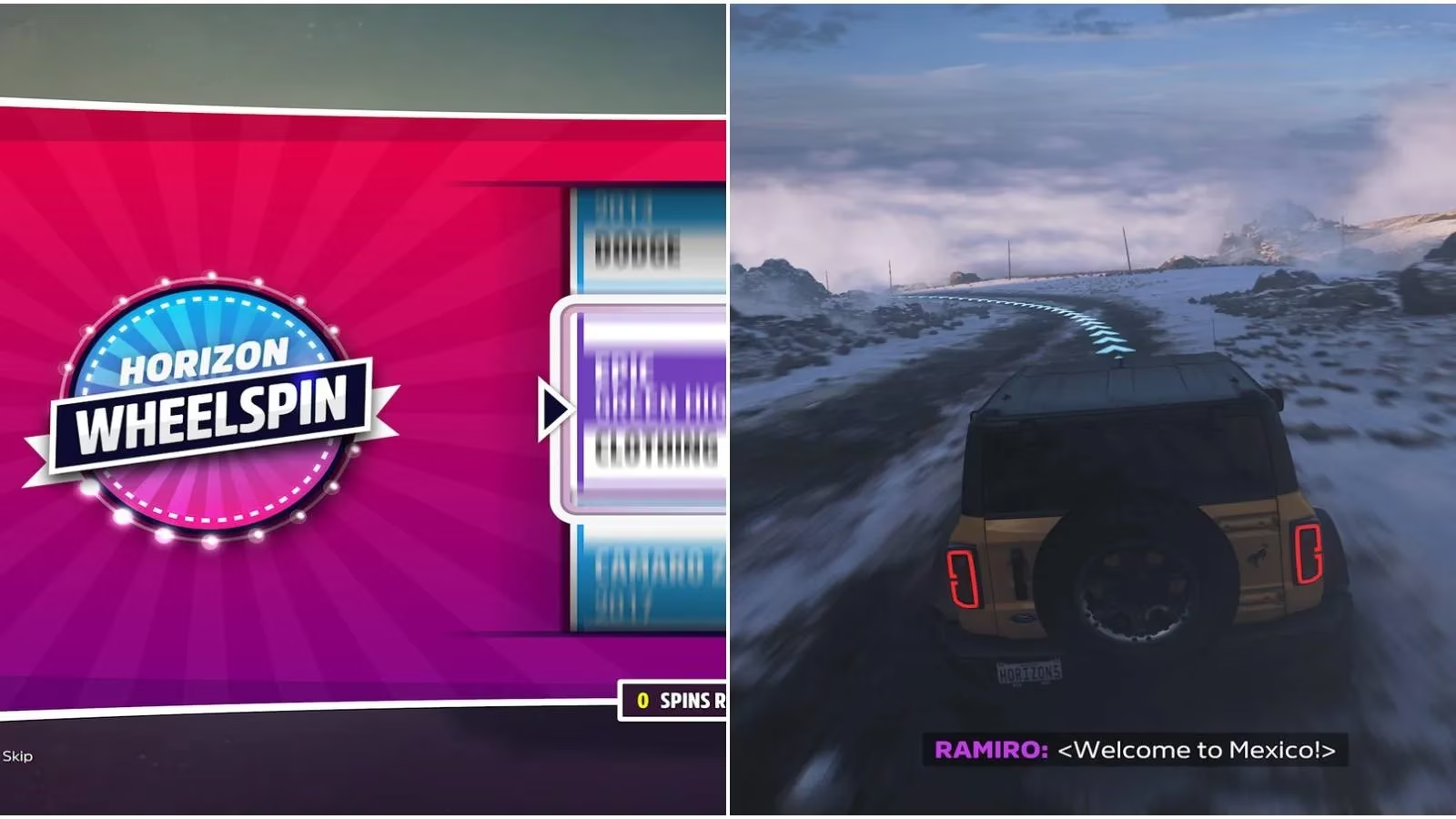
When it came to earning credits and unlocking cars, I spent an embarrassing amount of time grinding races that I thought would pay out the most. What I eventually realized—much to my relief—was that Forza Horizon 5 is absurdly generous with its progression. Between wheelspins, level-up bonuses, accelades, and the sheer number of credits thrown at you for simply participating in events, I never actually needed to repeat a race for cash. The game wants you to explore, experiment, and hop between different activities. The moment I stopped treating it like a job and started treating it like a festival, I found myself with a garage full of cars I was genuinely excited to drive.
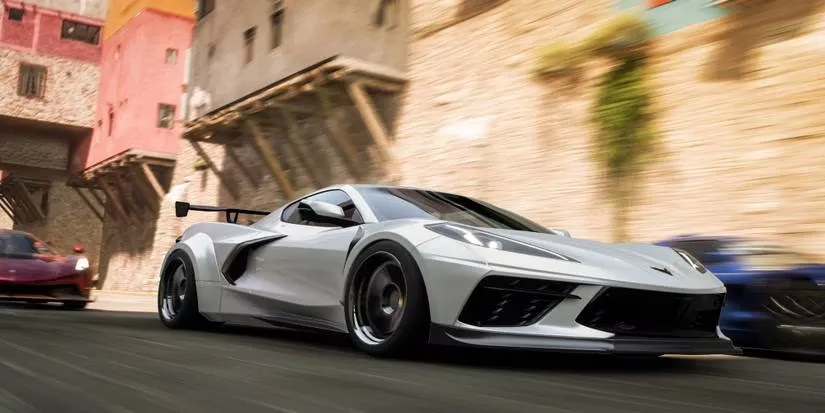
Tire choice was another area where my early assumptions led me astray. I naturally assumed that slick tires—those gloriously black and smooth pieces of racing rubber—would be the ultimate upgrade for any car destined for the track. But the roads of Mexico are rarely cooperative. Most races include sweeping bends, sudden elevation changes, and even brief stretches of gravel or dirt. Slick tires turned those sections into sheer terror. Once I switched to tires that balanced speed with handling, the difference was night and day. The car felt planted through corners, recoverable on loose surfaces, and still fast enough to challenge for podium finishes. Upgrades and tuning can compensate for straight-line speed, but grip is something you never want to compromise.

Perhaps the most valuable lesson I absorbed over hundreds of hours came from learning to race clean. There is a temptation, especially when an opponent is aggressively blocking you, to dive into corners with abandon, using the rear bumper of another car as a braking assist. I tried that approach for a while, convinced that a little dirt on the bumper was worth the position. In reality, those aggressive moves almost always cost me more time than they gained. The racing line exists for a reason, and braking when the game prompts you is not a sign of weakness—it's the foundation of consistency. Smooth inputs, patient exits, and clean overtakes have won me far more races than any number of desperate lunges ever did.
One of the most overlooked gems in Forza Horizon 5 is The Eliminator, a battle royale mode that many players never bother to try. I confess I ignored it for a long time, assuming it was a gimmick. When I finally jumped in, I was immediately hooked. The mode shrinks the map to a manageable arena where every encounter is a head-to-head race to a random destination. What makes it so brilliant is how much it teaches you about different car classes, map knowledge, and high-pressure decision-making. Every match felt like a crash course in reading terrain and adapting to unfamiliar vehicles. If you are new to the game, I cannot recommend The Eliminator enough—it will improve your core racing skills faster than almost anything else in the game.
Speaking of improvement, one habit I wish I had developed earlier was smashing XP boards. These glowing signs are scattered across the map like confetti after a festival, and each one gives you a welcome burst of experience points toward your next level. At first, I ignored them unless they happened to be directly in my path. Over time, I started seeking them out deliberately, planning small detours and off-road excursions to grab clusters of them. The XP adds up quickly, and the rewards from leveling up—wheelspins, credits, and cosmetic items—make the effort feel worthwhile. The map marks most of their locations, so there is really no excuse for leaving them untouched.
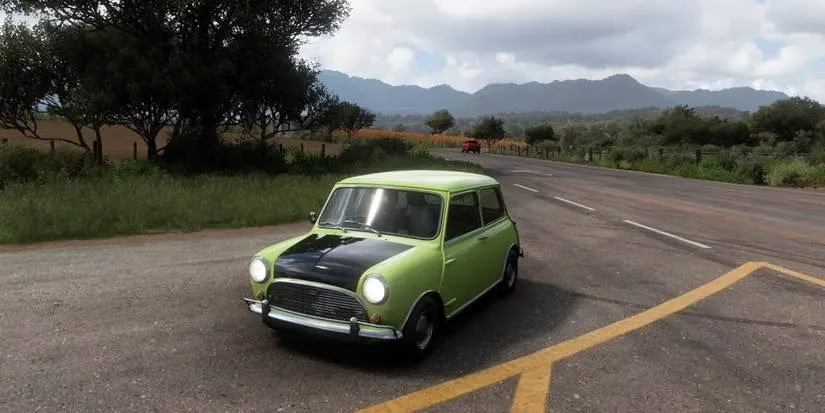
Driving between activities rather than fast traveling everywhere also became one of my favorite parts of the experience. There is a meditative quality to cruising the coastal highways or winding mountain roads between events. I learned the layout of the map organically, discovered shortcuts and alternate routes, and simply enjoyed the sensation of being in motion. More than that, all that seat time improved my car control and understanding of how different vehicles respond to varying road conditions. The journey between races is not wasted time—it is training disguised as leisure.
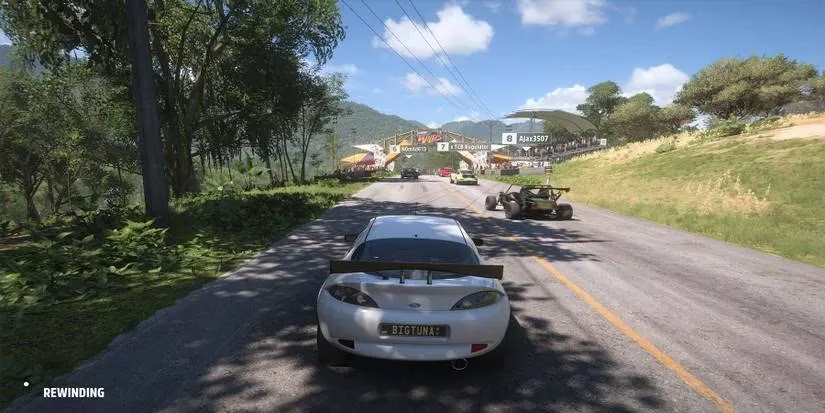
Finally, I want to talk about the Rewind feature, because I believe it is one of the most misunderstood mechanics in racing games. Some purists refuse to use it, arguing that it removes all challenge. I understand that perspective, but for someone still learning the intricacies of high-speed cornering, Rewind is a kindness. The ability to roll back time after a disastrous mistake and try a corner again is invaluable for understanding what went wrong. I used Rewind extensively during my first twenty hours, and gradually, I found myself needing it less and less. It is a teacher, not a crutch—provided you are willing to learn from your errors.
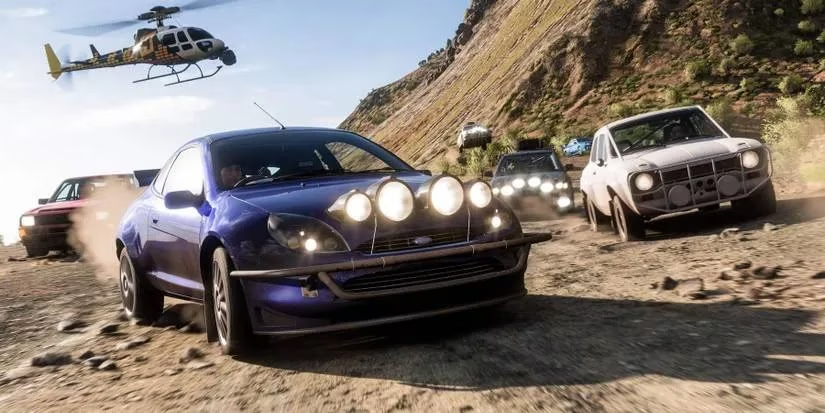
In the end, my time in Mexico has been defined by variety. The game rewards having a diverse garage, from nimble rally cars that eat dirt roads for breakfast to track-tuned machines that carve through mountain passes. It rewards exploration, curiosity, and a willingness to try new things. If I could give a single piece of advice to anyone starting Forza Horizon 5 in 2026, it would be this: do not rush. There is no finish line waiting for you in real life, only the next horizon, and it will still be there whenever you arrive.