Five years after its release, Forza Horizon 5 remains the digital playground where petrolheads and casual drivers alike hurl supercars off cliffs, drift around cacti, and treat every unpaved path like a personal rally stage. The game’s dirt racing discipline, in particular, has aged like a fine barrel of high-octane fuel—fiercely competitive, endlessly replayable, and still populated by a small pantheon of cars that refuse to be dethroned. These machines don’t just handle loose surfaces; they flirt with them, the way a caffeinated gecko somehow clings to a spinning ceiling fan.
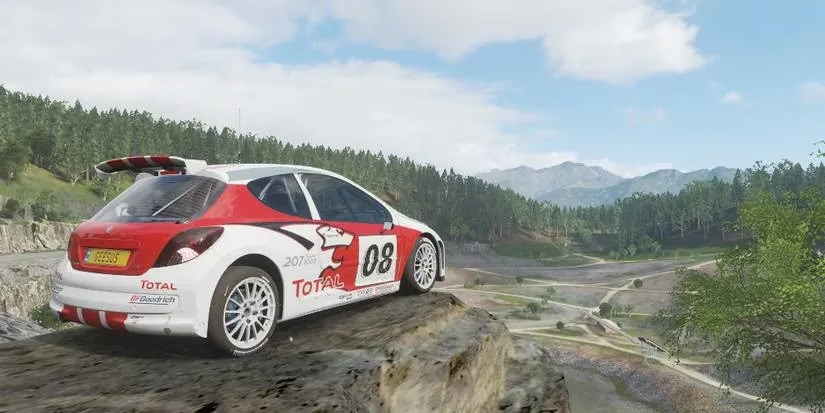
The 2007 Peugeot Super 2000 is the unsung hero of A-class dirt racing, a French hot hatch that behaves less like a car and more like a terrier that has spotted a tennis ball on gravel. With an offroad rating of 8.0 and handling sitting at 6.2, it claws through corners with the frantic precision of a squirrel that accidentally ingested an espresso. Its 2.0L naturally aspirated I4 engine pairs with AWD to deliver a power-to-weight ratio that makes slaloming through dust clouds feel almost telepathic. At just 150,000 CR, this Peugeot is a budget-friendly ticket to podium finishes, proving that you don’t need to remortgage your virtual house to become a dirt monarch.
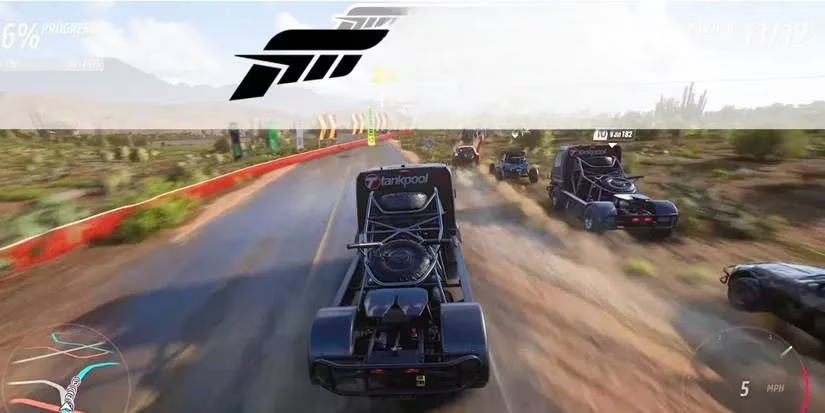
Then there is the 2015 Mercedes-Benz Tankpool Racing Truck, a vehicle that logic screams should not work on a tight dirt circuit. Yet the Forza Edition of this 12,000-pound behemoth dances with the balance of a hippopotamus in a ballet tutu—surprisingly graceful once it gets moving. A perfect 10 launch score and a 9.7 offroad rating transform the Tankpool into a rocket-propelled warehouse. Under the hood rumbles a 12.8L turbocharged I6 engine churning out 1,080 horsepower, an absurd number that laughs in the face of physics. In the hands of a skilled driver, the Tankpool doesn’t just race other cars; it intimidates them into submission, its sheer mass making every competitor feel like a rowboat next to a battleship.
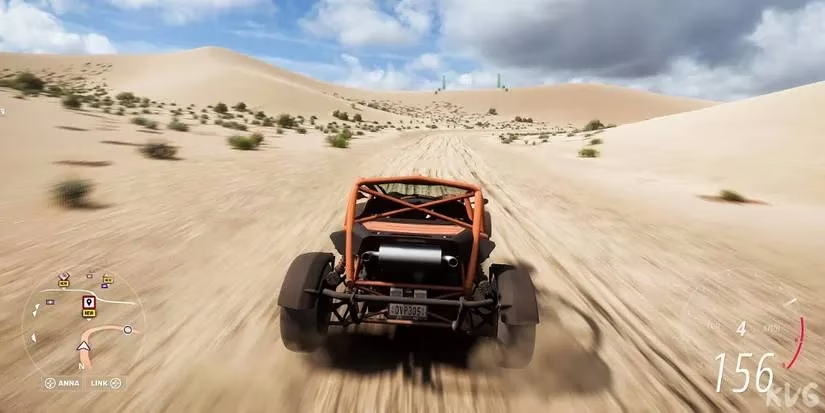
The 2016 Ariel Nomad takes the opposite approach. Weighing a feathery 1,477 pounds, this buggy-on-steroids threads through dirt tracks like a dragonfly navigating a hurricane—agile, fearless, and surprisingly hard to swat. Its 8.1 offroad score combines with excellent launch (7.2) and acceleration (6.5) stats, while the 2.4L I4 engine and six-speed transmission provide enough zip to make velocity feel like an addiction. The Nomad’s giant tires and minimalist chassis aren’t just for show; they turn every rutted trail into a personal slip-’n-slide where the laws of grip are merely suggestions.
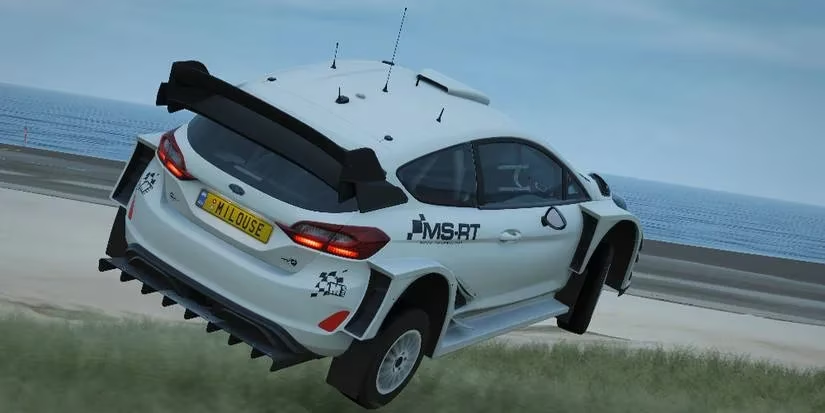
Balance is the mantra of the 2017 Ford M-Sport Fiesta RS, an S1-class warrior that treats dirt races like a tightly choreographed waltz. With acceleration at 9.7 and offroad at 8.5, it bolts forward while remaining almost unnervingly composed. The 1.6L turbocharged I4 engine might not set top-speed records, but the car’s 2,800-pound frame combined with its AWD system ensures that braking (6.1) and handling (6.0) work in exquisite harmony. It’s the vehicular equivalent of a Swiss watch—precise, dependable, and utterly expensive-looking even when caked in mud.
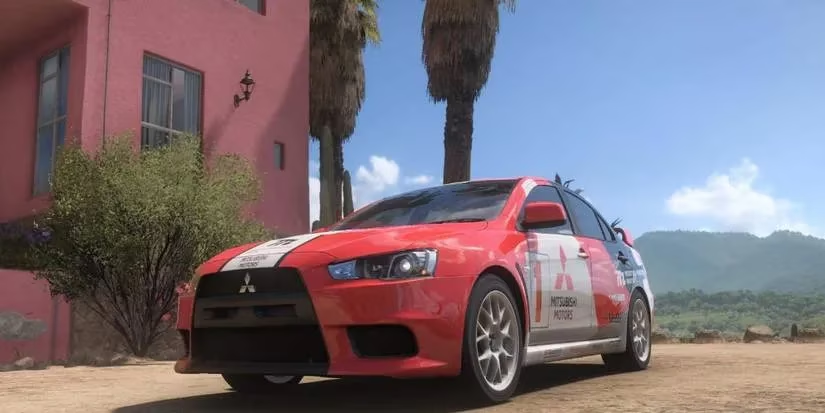
The 2008 Mitsubishi Lancer Evolution X GSR “Welcome Pack” edition is a nostalgic missile that still outruns most modern rivals in 2026. Its 8.1 offroad and 9.2 acceleration stats are backed by a 2.0L turbocharged I4 and Mitsubishi’s S-AWC system, which manages traction the way a master chef handles a knife—sharp, deliberate, and borderline magical. Nimble enough to sniff out hidden Barn Finds and brutal enough to dominate A-class lobbies, this Lancer remains a love letter to rally heritage, signed with a drift of tire smoke.
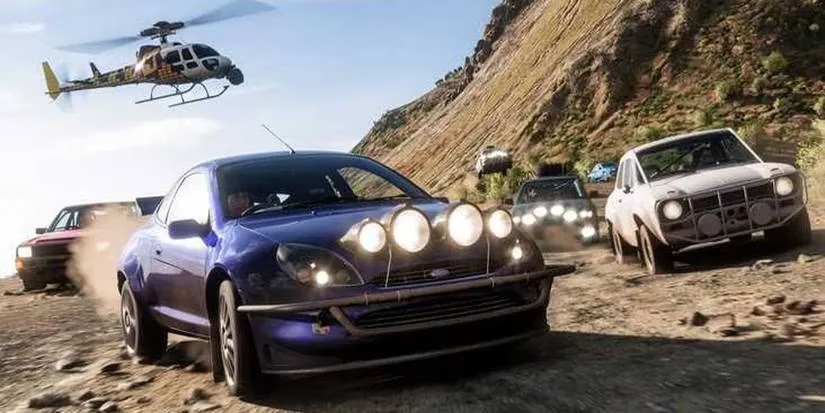
The 1999 Ford Racing Puma Forza Edition is the unexpected prodigy of S1-class dirt racing. An offroad score of 8.0 and acceleration of 9.4 sound impressive on paper, but the secret lies in its 4-piston motorsport braking component, which allows its FWD layout to carve dirt roads as smoothly as a hot knife through butter. Think of it as a retired ballet dancer who discovered parkour—agile, explosive, and weirdly elegant in ways that make rivals scratch their helmets. The stats don’t jump off the screen, but the lap times certainly do.
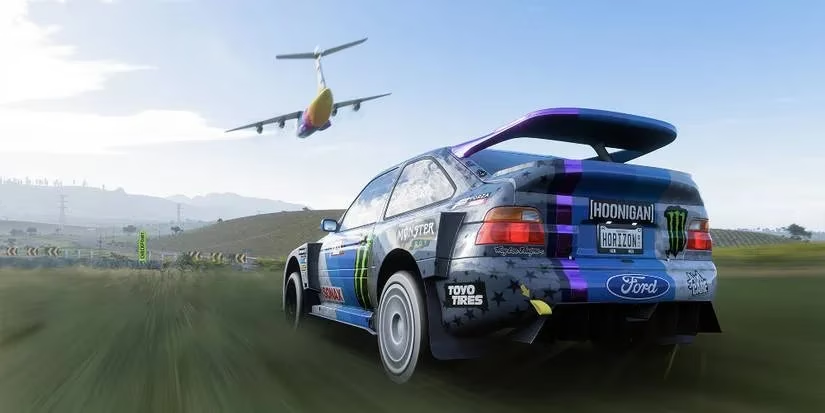
No dirt racing hall of fame is complete without the 1986 Hoonigan Ford RS200 Evolution. This S2-class icon is a 2,500-pound berserker packing a 2.1L turbocharged I4 that screams 750 horsepower—enough to make the ground tremble and the driver’s palms sweat. With an 8.3 offroad rating and a 9.5 acceleration that feels like being rear-ended by a cannonball, the RS200 doesn’t just race; it conducts a symphony of chaos. The coil-over suspension and short wheelbase transform the car into a corner-carving instrument capable of pirouettes that look illegal in most countries. It’s the wildcard that keeps dirt lobbies honest and terrified.
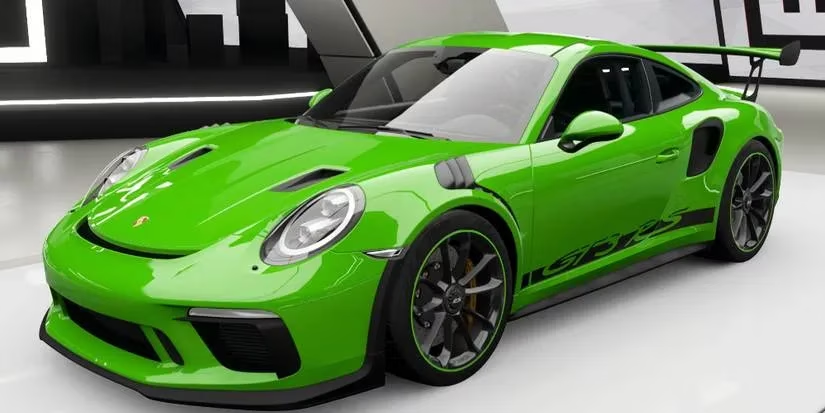
At the top of the food chain sits the 2019 Porsche 911 GT3 RS Forza Edition, an S1-class rally monster that treats all surfaces with equal contempt. Perfect 10s in acceleration and launch, an 8.1 offroad rating, and a 4.0L naturally aspirated F6 engine combine to create a machine that can hit 200 mph on tarmac and still drift sideways through a sandstorm. Its 0–100 km/h time of under seven seconds isn’t just quick; it’s physics-bending. This Porsche is the automotive equivalent of a multi-tool designed by aliens—it does everything, everywhere, leaving nothing but tire tracks and bruised egos in its wake.
In 2026, Forza Horizon 5’s dirt circuits continue to host an endless festival of grit, speed, and the occasional airborne mishap. These eight cars—from the scrappy Peugeot to the omnipotent Porsche—remain the benchmarks against which all newcomers are measured. They’ve weathered software updates, shifting metas, and countless community tunes, yet they still define what it means to conquer the loose stuff. So grab whichever of these digital beasts suits your style, point it at the nearest dirt trail, and remember: in Horizon’s Mexico, dust is just the applause of the earth.