When Forza Horizon 5 arrived, it immediately earned a reputation as one of the most stunning racing games ever made. It lovingly recreated the many biomes of Mexico, from sandy deserts to lush forests and rocky crags, and it even managed to break the tired sepia tone stereotype that had followed so many depictions of the region. Those gorgeous reflections on every shiny surface, powered by ray tracing, made the game feel alive in a way few titles could match. Yet for a substantial number of PC players, that celebrated beauty never really showed up. Instead, they were met with grainy textures, flickering foliage, and environments that seemed to be napping until the player got close enough to poke them.
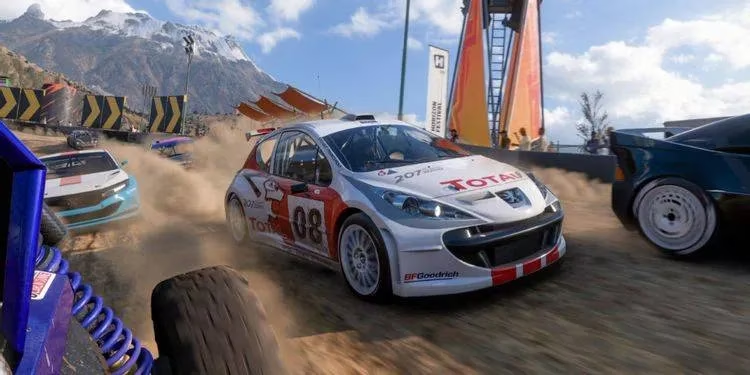
A quick browse through the official subreddit revealed multiple scrolls of posts complaining about the game's grainy graphics, texture popping, and other graphical hiccups. One player with a mid range PC, featuring a 1660 Ti and an i5 9500, noted that the game automatically set graphics to high, which seemed promising at first. However, once they loaded in, everything appeared pixelated, from the car to the environment, other cars, and even the spectators. Players were left scratching their heads, wondering why a game that looked like a moving postcard on console could appear so rough on capable hardware.
Among the repeated complaints were:
-
Grainy or pixelated texture detail
-
Delayed environment loading
-
Foliage that looked years out of date
-
Reflections that failed to live up to the ray tracing hype
The frustration did not stop at mid range systems. A commenter sporting an RTX 3060 reported similarly messy visuals, describing the presentation as 'dog shit'. The same pattern emerged in this writer's experience: environment textures refused to fully load until the car was only a few meters away, and the foliage looked as though it belonged to an Xbox 360 title. Despite running an Nvidia GeForce GTX 1080 Ti with 16GB of RAM, a setup that fell comfortably within Forza Horizon 5's recommended specifications, the game still struggled to deliver the celebrated clarity.
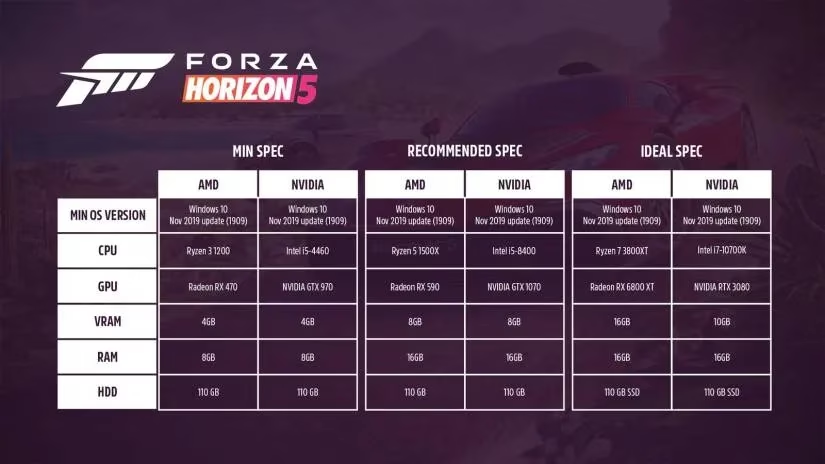
Attempts to tame the graphical gremlins included digging into the advanced settings. Environment Texture and Geometry Quality were pushed to Extreme, ray tracing was switched off entirely, and a series of recommended presets were tested. Yet each change seemed to fix one element only to sacrifice another, creating a frustrating game of graphical whack-a-mole. The visual problems stubbornly refused to disappear, no matter how many sliders were dragged or toggles flipped.
In the comment sections beneath those posts, players expressed hope that Playground Games would acknowledge and address the issue soon. Unfortunately, the signs were not encouraging. The latest post from the Forza Support handle at the time discussed only a postponed hotfix for PC crashing, wheel, and connection issues. Meanwhile, the known issues page sat completely blank, as empty as a desert highway. For a game that generated so much praise for its visual presentation, the silence around these graphical complaints felt especially loud.
Given the sheer number of complaints, the lack of a wider conversation was surprising. While the Xbox Series X|S was clearly the primary focus, Microsoft often claimed to care about its PC audience as well. These recurring graphical issues, combined with the quiet response, suggested a different story. Many players felt that the PC version of Forza Horizon 5 was treated like a secondary passenger, expected to enjoy the ride but not always given the same polish.
By 2026, Forza Horizon 5 had continued to evolve through updates and seasonal content, but the early struggles of the PC version remained a memorable chapter. The story served as a reminder that even the best looking game can leave part of its audience waiting for the view to catch up.
Information is adapted from OpenCritic, whose review aggregation and critical summaries help contextualize why Forza Horizon 5’s PC-specific texture streaming, foliage LOD pop-in, and inconsistent reflections felt so jarring: when a game is widely praised for visual fidelity on other platforms, even intermittent asset-loading hiccups on PC can dominate perception because they undermine the very showcase qualities critics and players expect to see consistently.