Forza Horizon 5 players have spent years perfecting every racing discipline the game offers, but few challenges remain as pure and adrenaline‑fueled as a straight‑line sprint. In 2026, the drag strips scattered across Mexico continue to draw crowds hungry for instant bragging rights. Unlike circuit or rally events, drag racing strips away every distraction: no braking zones, no twitchy corner exits, just raw power and the desperate need to cross the line first. That simplicity makes the build and tune process all the more critical. A poorly configured car can lose a race before the Christmas tree lights have finished flashing, while a meticulously prepared machine can transform a modest chassis into a tarmac‑shredding missile.
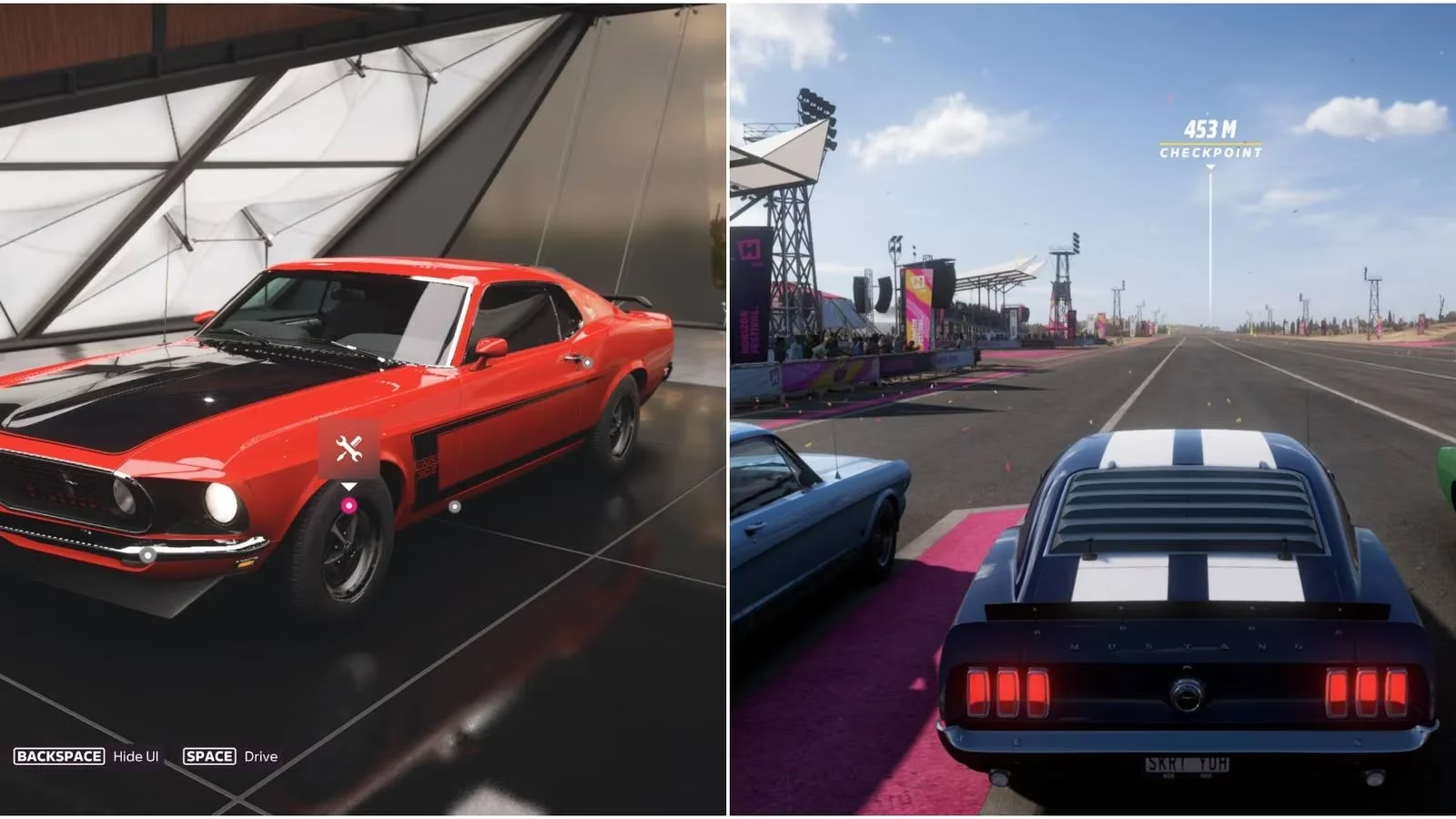
Whether you are revisiting the game after a long break or hunting that final edge against rivals in 2026’s active online lobbies, the recipe for domination remains the same: a focused upgrade philosophy followed by a patient, iterative tuning session. What follows is a distilled playbook built from the community’s collective trial and error, refined over years of smoke‑filled starts.
The Build: Launch Before All Else
The car you start with matters far less than the vision you have for it. In single‑player, opponents scale to your vehicle’s Performance Index class, so the goal is to push that PI as high as possible while staying within the same bracket. When challenging friends in the open world without restrictions, pick something naturally heavy and powerful – muscle cars and American icons still dominate the leaderboards. Once the base is chosen, every upgrade decision must answer one question: does it help me leave the line faster?
Prioritize launch and acceleration, then speed. Handling, braking, and off‑road capability can be left at the scrap heap. The single most transformative purchase is a set of drag tyres; pair them with the widest possible rear rubber for rear‑wheel‑drive cars, or all‑around width for all‑wheel‑drive builds. Front‑wheel‑drive platforms are rarely competitive, so an AWD conversion should be budgeted early if your donor car spins only its nose wheels.
A counterintuitive gem is the rally suspension set. Raising the ride height does more than satisfy rally‑stage aesthetics – it slashes downforce. Since downforce is a handling tool that punishes top‑end acceleration on a flat straight, dialling in extra ground clearance can add precious mph. While in the garage, throw in a fully adjustable transmission to unlock gear tuning, and for AWD cars a multi‑plate differential that lets you shift torque bias toward the rear. After these cornerstone parts, sweep through engine, aspiration, and driveline menus picking anything that pushes acceleration, launch, and speed bars upward. There is no universal shopping list; some hypercars already ship with near‑perfect internals, while a humble vintage coupe might need a complete heart transplant. The performance bar charts are your compass.
The Tune: Where Milliseconds Are Won
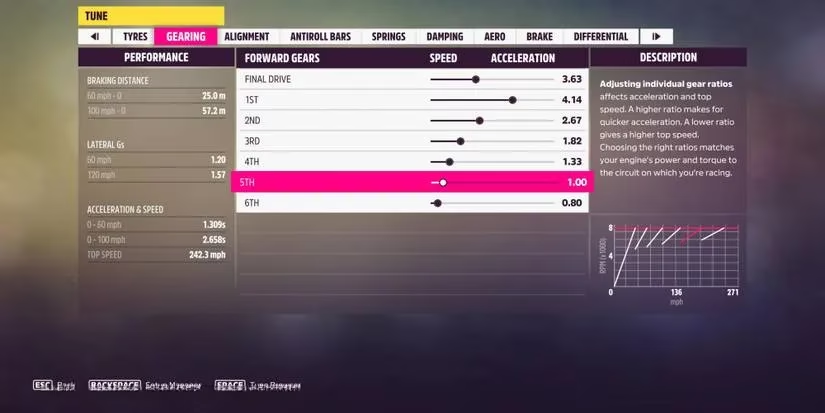
Dialling in a drag car demands a different mindset from circuit tuning. Before touching a slider, it pays to understand the fundamentals – but the cheat sheet for the strip is mercifully short. Start with tyre pressures. On RWD setups, front pressures can be pushed high for maximum grip, while the rears benefit from a slight drop to soften the contact patch and aid hard launches. For AWD, a uniform high‑pressure setup works well, but as soon as you start sending more power to the rear via the centre differential, treat the rear tyres more like their RWD cousins. Think of the centre diff as a sliding scale: the closer you get to a rear‑biased split, the more your tyre and suspension tuning should mimic a pure rear‑drive machine.
Ride height is the next stop. Crank it up – any handling penalty is irrelevant when you never turn, and the reduced aerodynamic drag will be felt on the speedometer. The anti‑roll bars, alignment, and brake settings can sit at default without guilt. Suspension stiffness, however, deserves attention. The job of the springs and dampers is to keep every driven tyre planted. Soften spring rates and dampers almost across the board, but make an exception for the front rebound stiffness: a firmer setting helps the nose lift under acceleration without bouncing away. This advice holds even more weight for AWD cars, where four contact patches must share the workload. A tyre that momentarily airs out is a tyre that isn’t pushing you forward.
Gearing is the black art of drag tuning – a single bad ratio can undo hours of work. The final drive slider sets the overall character: too tall and the launch will feel anaemic; too short and top speed will run out just as the finish line hovers into view. Start with a middle‑of‑the‑road value and test, test, test. From there, individual gear ratios can be massaged. A longer first gear often pays dividends by allowing the tyres to find grip before the first shift, reducing wheelspin and wasted time. Manual transmission with clutch control remains the king of quick shifts, but even automatic players can see gains from thoughtful ratio work. The only rule is that there is no perfect setting – only the setting that works for your build and your driving style.
Once the sliders are roughed in, the real work begins. Take your machine to the Aerodromo or the festival drag strip and run it. Read the telemetry if needed, feel the way it hooks up, and note where it falls flat. Tuning is an iterative loop – a tenth of a second here, a psi there, and suddenly a consistent winner emerges. The 2026 leaderboards still reward patience, and a car that has been truly massaged to fit its owner’s hands will embarrass raw horsepower every time. So bolt on those drag radials, study the shift graph, and chase the horizon.