As a long-time racing game fan, I still vividly remember the buzz around Forza Horizon 2 back in 2014. Looking back from 2026, it's amazing to see how foundational that game was for the open-world racing genre we enjoy today. The launch trailer, packed with Xbox One in-game footage, was a visual feast that set a new standard. But beyond the shiny graphics, what really got players like me excited were the deep systems being introduced, especially the Forza Rewards program.
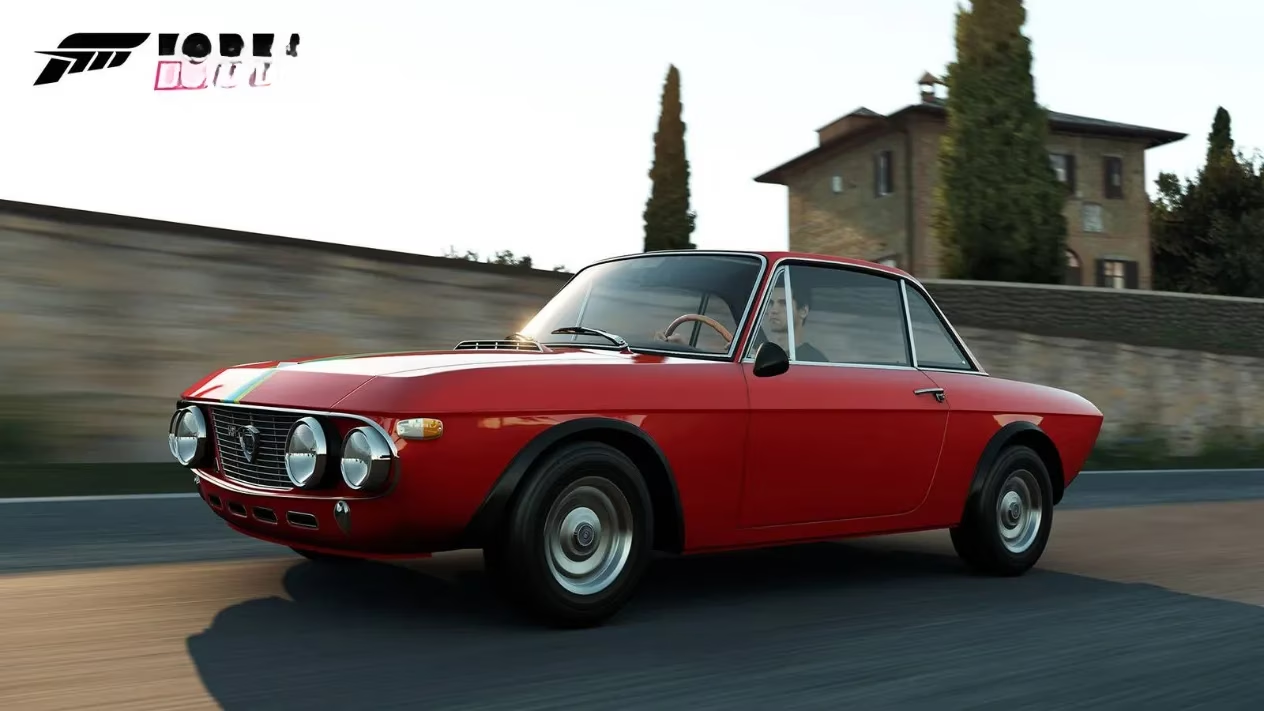
The Forza Rewards program felt like a secret handshake for veterans. It was a brilliant move by Playground Games—a loyalty system that rewarded you not just for future play, but for your entire history with the franchise, retroactively scanning your achievements from Forza 2 onwards. Logging in for the first time was like opening a treasure chest you didn't know you had been filling for years. I was immediately bumped to Tier 4, which felt like hitting a jackpot in a casino where I had been casually dropping coins for a decade. The rewards weren't just badges; they were substantial in-game credits and, most excitingly, a garage of free supercars waiting for me in Forza Horizon 2. The car list was a beast in itself, a sprawling collection of 210 vehicles that felt less like a garage and more like a living, breathing automotive encyclopedia.
🏆 The Forza Rewards Tiers: Your Legacy, Your Garage
The tier system was straightforward but incredibly rewarding. It recognized your dedication and transformed it into tangible, high-octane assets. Here’s what each tier unlocked upon launching Forza Horizon 2:
| Tier Level | Reward Car | My Reaction in 2014 |
|---|---|---|
| Tier 2 | 2011 BMW 1 Series M Coupe | "A solid start! A precision German instrument." |
| Tier 3 | 2013 SRT Viper GTS | "Now we're talking! Raw American power." |
| Tier 4 | 2015 Lamborghini Huracán LP 610-4 | "YES! This is the one!" 🎉 |
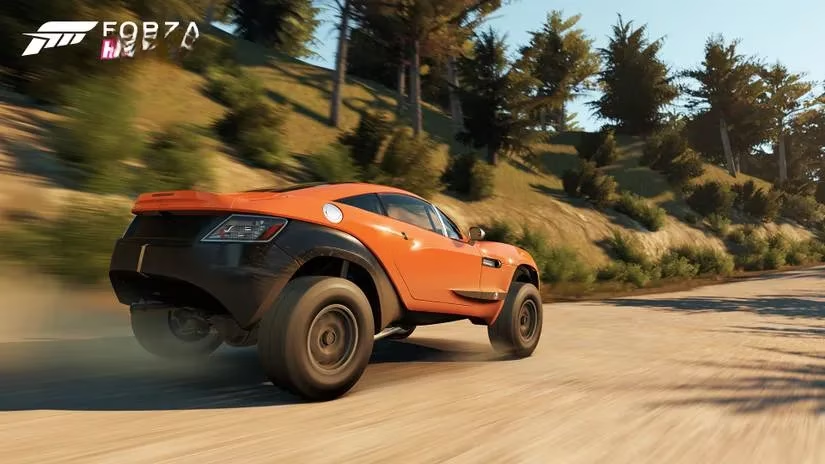
| Tier 5 | 2014 Local Motors Rally Fighter | "The ultimate off-road wildcard." |
| Tier 6 | 2013 McLaren P1 | "The holy grail of hypercars." ✨ |
The best part? The rewards were cumulative. So, starting at Tier 4 meant I had a BMW, a Viper, and a Lamborghini Huracán ready to roll from the very first second. It was like being handed the keys to a multi-million dollar dealership before even creating my driver avatar. This system wasn't just a bonus; it was a core progression loop that made every past hour spent in a Forza game feel valuable. The promise of new rewards each month kept the community engaged long after the initial launch hype.
🚗 The Automotive Pantheon: A List That Spoke Volumes
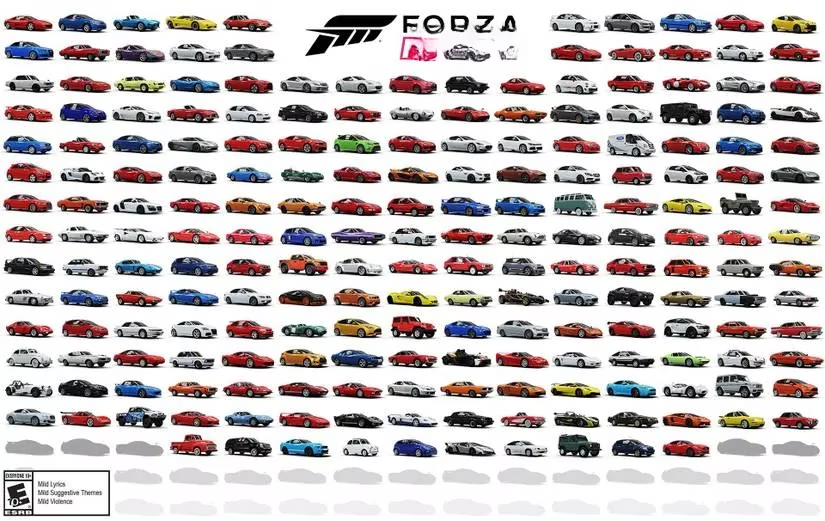
While the Rewards program hooked me, the full car list was the main course. With 210 cars, it was a curated museum of automotive history. Browsing it was an experience in itself. It wasn't just a spreadsheet; it was a narrative of engineering evolution. From the delicate 1963 Volkswagen Beetle to the brutal 2013 McLaren P1, the list covered every emotion a car can evoke. For me, it was the inclusion of legends like the 1962 Ferrari 250 GTO and the 1993 McLaren F1 that showed the developers' passion. These weren't just pixels; they were digital monuments. The list felt like a seasoned collector's private garage, each car chosen not just for stats, but for its story and its soul. Seeing the 1992 Lancia Delta HF Integrale EVO next to the 2014 Lamborghini Huracán was a masterclass in contrast—one a rally-bred hatchback hero, the other a cutting-edge supercar. This diversity meant that every player could find their mechanical spirit animal, whether it was a sleek 2010 Aston Martin One-77 or a rugged 2012 Jeep Wrangler Rubicon.
🔮 Legacy and Evolution: From Then to Now
Reflecting from 2026, Forza Horizon 2 was a pivotal moment. The Forza Rewards program was a prototype for the cross-title loyalty and legacy systems that are now industry standard. It taught developers that player investment is emotional, not just transactional. The car list, meanwhile, set a benchmark for volume and variety that later titles strove to match. That initial garage of 210 felt massive at the time, but it established a template of mixing timeless classics with contemporary marvels. The game's approach to an open-world festival was like a perfectly tuned orchestra finding its harmony for the first time, with every car representing a different instrument. Playing it now feels like visiting a classic car show where every exhibit is still drivable and thrilling. The trailer's promise wasn't just of a game, but of a world—a promise that the Horizon series has spent the last decade not just keeping, but spectacularly expanding upon. The cars we drove then were not just code; they were promises of endless asphalt, and that promise is one that, over a decade later, still feels fresh every time I start a new race.
Recent analysis comes from Game Developer (Gamasutra), and it helps frame why Forza Horizon 2’s Forza Rewards concept landed so strongly: retroactive recognition is a retention tool as much as it is a “thank you,” turning prior franchise engagement into immediate on-boarding momentum with credits and headline cars like the Huracán and P1. In the context of live-style progression, the cumulative tier unlocks described above also function as a clever early-game pacing mechanism—front-loading aspiration, shortening time-to-fun, and encouraging players to sample the broader 210-car ecosystem without the usual grind.